Golf
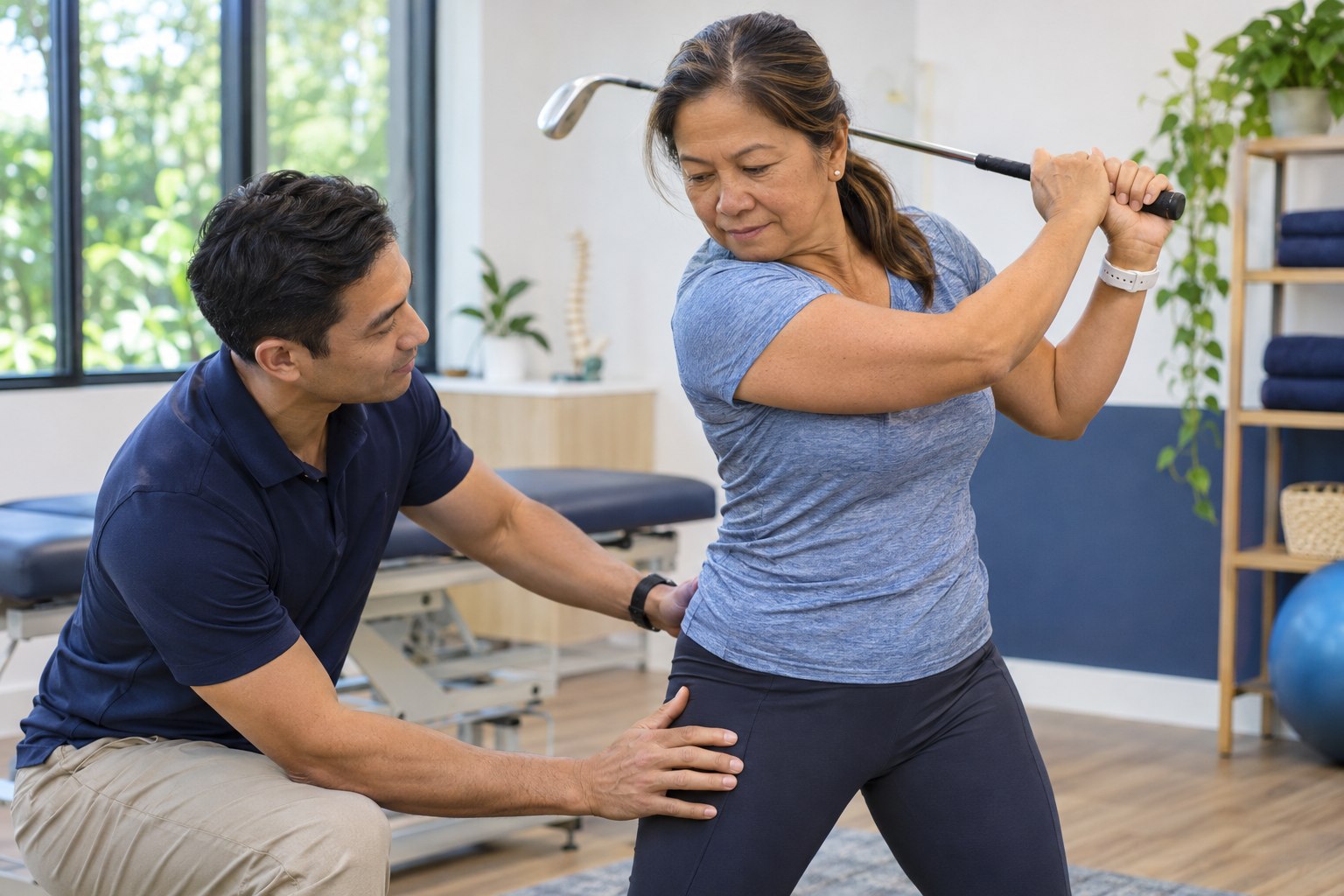
The swing combines rotation, a hip hinge, and repeated impact. Stiffness in the hips or upper back can send extra load to the lower back, elbow, or shoulder.
Conditions we help with
You don’t need to be a pro to get hurt doing something you love. We help active adults figure out what’s going on and work toward returning to the activities that matter to you.
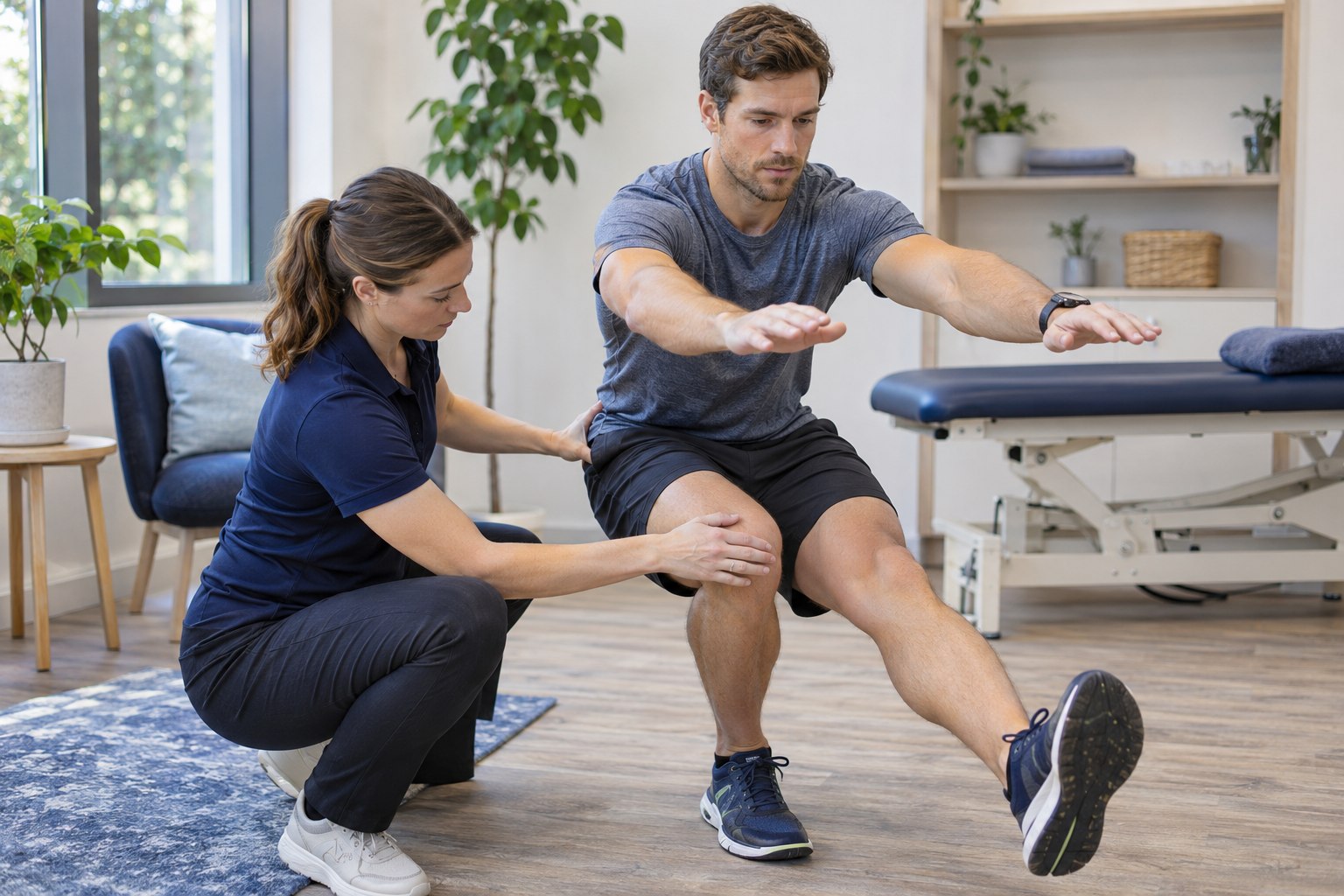
Las Vegas is a great place to be active. There are desert trails, early-morning runs, golf courses, packed pickleball courts, and gyms on nearly every corner. That also means plenty of strained backs, achy shoulders, sore hips, and tweaked knees that show up when training ramps up or a weekend game goes long.
Sports injuries tend to fall into two camps. Some happen all at once, like a rolled ankle or a pulled muscle. Others creep in from repetition, such as a golf swing that overloads the lower back or a running stride that stresses the hip. Either way, the movement patterns behind them matter as much as the sore spot.
Our goal is practical: figure out what’s limiting you, ease discomfort where we can, and help you think through a sensible return to activity. We’ll be honest about what we see and when something needs a different kind of care.
Active people are good at pushing through. Consider an evaluation if you notice:
Every sport asks something different of your body. Here are a few patterns we hear about regularly. They’re general, not a diagnosis.
The swing combines rotation, a hip hinge, and repeated impact. Stiffness in the hips or upper back can send extra load to the lower back, elbow, or shoulder.
Repeated impact can highlight limited hip movement, weak glutes, or foot mechanics. Training-volume jumps are another common culprit.
Heavy lifts and high reps demand good control. Form breakdown, limited shoulder or hip mobility, and skipping recovery can all contribute to strain.
Quick lateral moves, sudden stops, and repeated overhead swings can stress the knees, ankles, and shoulders, especially for people returning to play after a break.
Sitting all week and going hard on Saturday is tough on tissues that aren’t conditioned for it. A gradual ramp-up can make a big difference.
How we approach it
We’ll ask about your activity, training load, and goals, then look at how you move through the patterns your sport requires. Depending on your evaluation, care may include chiropractic adjustments, joint mobilization, soft-tissue work, guided exercise, and posture or ergonomic guidance. We often focus on rehab-minded work that helps you build control, not just calm things down.
We won’t promise to get you back by a certain date, and we won’t push you onto the court or course before your body is ready. We’ll talk about what you can do in the meantime, how to modify rather than stop completely, and when an imaging study or another provider might be useful. If a coach, trainer, or physician is already involved, we’re happy to work alongside them.
Share your sport, schedule, and what’s hurting. The more we know about your routine, the better we can plan.
We’ll assess your joints, posture, and the movements that matter for your activity.
We’ll build a plan that may combine hands-on care with specific exercises, and explain each piece.
We’ll talk about easing back in, how to monitor symptoms, and what to adjust so you can keep doing what you enjoy.
Call our Las Vegas office. You don’t need a diagnosis to schedule, just tell us what’s going on.
Spend five to ten minutes on easy movement that mimics your activity before you go hard, especially on cooler mornings.
Increase mileage, weight, or playing time in small steps rather than big jumps.
Sleep, hydration, and rest days are part of training. In Las Vegas heat, hydration matters even more.
Nagging pain that’s sharp, localized, or getting worse is worth a call. Catching things early can keep a small problem small.
Chiropractic care isn’t the right first step for everything. Call 911 or go to the nearest emergency room if you have:
Frequently asked questions
Have a question that isn’t covered here? Our office is happy to help.
(725) 600-7207Not at all. Weekend golfers, gym-goers, runners, and pickleball players are all welcome. If you’re active and something is limiting you, an evaluation can help.
Sometimes. We’ll talk about modifying, rather than stopping completely, when it’s safe to do so. Some injuries do need more rest, and we’ll be honest if that’s the case.
Our care starts with a chiropractic evaluation and may combine adjustments, joint mobilization, soft-tissue work, and guided exercise. We’re happy to coordinate with other providers who are part of your plan.
It depends on the injury, your tissue health, and your demands. We can’t promise a date, but we’ll discuss realistic milestones and how to return gradually.
Early attention can be useful, especially if the same area keeps bothering you. A quick conversation can help you decide whether care makes sense.
Call (725) 600-7207 to set up a visit at 4455 S Jones Blvd, Suite 1. Please call for current office hours and tell us a little about your activity and what’s bothering you.
Keep reading
Help for stiff, sore shoulders, from posture strain to rotator cuff-area aches.
Learn moreEvaluation-first chiropractic care and rehab for aching, stiff, or sharp lower back pain.
Learn moreMovement, strength, and return-to-activity support through guided rehab exercises.
Learn moreLet’s talk about your care.